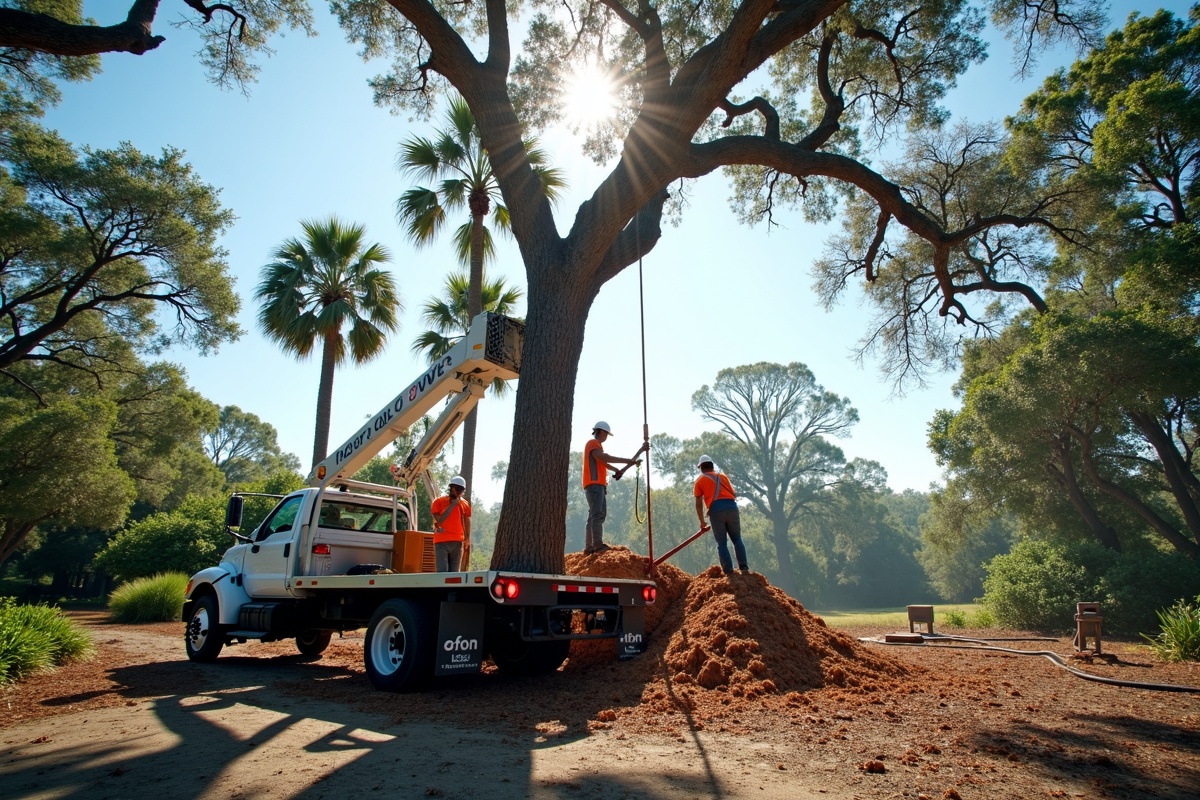
How Much Does Tree Removal Cost in Pensacola, FL? (2026 Pricing Guide)
If you’ve got a dead pine leaning toward your fence, a live oak limb that cracked in the last storm, or a tree that took serious damage during Hurricane Sally and has been declining ever since, the first question most Pensacola homeowners ask is: *what is this going to cost me?*
The honest answer is that tree removal prices in Pensacola vary significantly — and anyone who gives you a firm number without seeing your specific tree should be approached with caution. But there are clear, consistent factors that drive price, and understanding them helps you evaluate quotes accurately, ask the right questions, and avoid being overcharged.
This guide covers the real factors that determine tree removal pricing in Escambia and Santa Rosa County in 2026.
The Short Answer: What Tree Removal Typically Costs in Pensacola
Tree removal in the Pensacola area generally ranges from a few hundred dollars for a small, straightforward tree with good access to several thousand dollars for a large live oak, a tall pine near a structure, or a complex removal requiring extensive rigging. The wide range reflects the genuine variation in job difficulty — a 15-foot crape myrtle in an open front yard and a 70-foot slash pine overhanging a screened lanai are both “tree removal” but have almost nothing else in common.
Rather than providing specific dollar figures that may not reflect your actual situation (prices vary by company, job complexity, market conditions, and urgency), here’s the practical guidance: get at least two written estimates from licensed, insured local companies before committing to any work. A reputable company will assess the job on-site and provide a written quote with no obligation.
The Factors That Drive Tree Removal Pricing in Pensacola
1. Tree Size
Size is the biggest single driver. Tree service companies typically assess both trunk diameter (measured at chest height — DBH, or diameter at breast height) and total height. Both matter.
- Small trees (under 20 feet, trunk under 6 inches): Relatively quick and low-risk. Minimal equipment needed.
- Medium trees (20–50 feet, 6–18 inch trunk): The most common residential range. Requires more equipment and crew time.
- Large trees (50+ feet, trunk over 18 inches): More labor, heavier equipment, longer time on site. Price increases substantially.
- Very large trees (mature live oaks, tall slash pines, large water oaks): Complex removals that require experienced climbers, proper rigging, and often a full crew day. Pensacola has more of these than most markets.
2. Location and Access
Where the tree sits on your property affects cost almost as much as size in some situations.
Easy access (lower cost):
- Tree in an open backyard with gate access for equipment
- Tree on a front lot away from structures
- Multiple trees clustered in the same area (efficiency)
Difficult access (higher cost):
- Tree surrounded by fencing with no equipment access — requires hand-carrying equipment and material
- Tree overhanging the house, screened lanai, pool, or other structure
- Tree on a slope or in a drainage area
- Backyard accessible only through a narrow side gate or passage
3. Proximity to Structures and Utilities
A tree removal in an open lot is very different from one where every piece must be rigged and lowered to avoid landing on a roof, fence, vehicle, pool enclosure, or AC unit. Rigging takes extra time and technique, which means higher cost.
Utility lines add another layer. Trees in contact with Gulf Power / Florida Power & Light lines require specific protocols and sometimes utility coordination, which affects scheduling and cost.
4. Storm Damage Complexity
Storm-damaged trees introduce additional complications that standard removals don’t have. A tree that partially uprooted and is leaning, a pine that snapped at mid-trunk and is resting on a fence, or a live oak limb wedged against a roofline — these situations require careful assessment of tension, load paths, and secondary hazards before any cutting begins. Emergency or storm-damage removals are also in higher demand following storm events, which typically drives up pricing market-wide.
5. Tree Health and Wood Condition
A fully dead tree isn’t always cheaper to remove than a living one. Dead wood has unpredictable internal structure — it can split or shatter under cutting load, requiring more conservative technique and heavier rigging. A severely decayed trunk may also be too unsafe to climb. In Pensacola’s humid climate, dead trees can decay rapidly, which accelerates these complications.
6. Stump Grinding
In most cases, stump grinding is priced separately from tree removal. It’s almost always worth bundling if you’re already having a tree removed — the crew and equipment are on-site, and stump grinding bundled with a removal is typically less expensive than scheduling it as a standalone job later. Learn more about stump grinding →
7. Debris Handling
Standard debris removal — chipping branches, sectioning the trunk, hauling everything away — should be included in any reputable quote. Always ask specifically what’s included. Some homeowners want to keep the firewood (trunk sections cut to length), which can slightly reduce cost since the company doesn’t haul the wood.
8. Number of Trees
Removing multiple trees in a single visit typically reduces the per-tree cost. Setup time — getting the crew, truck, and chipper to your property — is the same whether you’re removing one tree or five. If you have multiple trees that need attention, scheduling them together is more economical.
What’s Typically Included (and What’s Not)
Usually included in a reputable quote:
- Labor and equipment to fell and section the tree
- Chipping of all branches and brush
- Cutting trunk into manageable sections
- Hauling away all debris (unless you specify you want to keep it)
- Basic site cleanup (blowing or raking sawdust and chips)
Usually priced separately:
- Stump grinding
- Hauling away large log sections (versus leaving them for firewood)
- Any permit-related costs (rare for most private residential removals in Pensacola — but see our permit guide →)
- Emergency / after-hours premium for urgent situations
Red flags in a quote:
- Verbal-only pricing with no written estimate
- Price dramatically below other quotes without explanation (often indicates no insurance, which leaves you liable for any damages or injuries)
- Pressure to decide on the spot
- After-storm door-to-door solicitors who can’t produce a license and insurance certificate
- No mention of credentials when asked directly
Does Homeowner’s Insurance Cover Tree Removal in Pensacola?
Sometimes — and Florida-specific rules apply.
Likely covered: A tree that falls and damages a covered structure on your property (your home, garage, fence, detached structure). Florida homeowners policies typically cover the cost of removing the tree from the damaged structure and some debris removal.
Typically not covered: A tree that falls in your yard without hitting anything — even if it was a close call or created a significant mess. Also, trees that were visibly dead or declining before they fell may face additional claim scrutiny.
Named storm considerations: Florida policies vary on windstorm coverage, particularly in coastal counties. Some policies have separate hurricane deductibles or windstorm exclusions. Know your policy before assuming a storm-related tree loss is covered.
Always worth doing: Contact your insurance carrier before starting cleanup. Photograph everything before any work begins — wide shots and close-ups. Get a written estimate from the tree company that can be submitted with the claim. Ask the tree company for a written scope and completion document.
How to Get an Accurate Quote for Tree Removal in Pensacola
1. Get it in writing. A reputable company provides a written estimate — not just a number in a text message.
2. Ask what’s included. Specifically: debris removal, stump grinding, and cleanup. Confirm what happens to the wood.
3. Ask about insurance. Request proof of general liability insurance and worker’s compensation. An uninsured crew working on your property exposes you to significant liability for property damage and injuries.
4. Get more than one quote. At minimum, two quotes on any substantial job.
5. Be cautious with after-storm door-to-door solicitors. Following major storms, unlicensed crews sometimes canvass the Pensacola area looking for quick cash jobs. Verify credentials before signing anything or paying a deposit.
6. Don’t let urgency force a bad decision. If a tree is an immediate safety hazard, address the hazard — but you can still take 30 minutes to confirm credentials before the crew starts non-emergency work.
Ready for a Quote on Your Pensacola Tree?
Pensacola Tree Pros provides free, written, no-obligation estimates for tree removal throughout Escambia and Santa Rosa County. We assess the job on-site so our quote reflects your actual situation — not a generic phone guess.
Call (850) 361-2143 or request your free estimate online →
We serve Pensacola, Gulf Breeze, Pensacola Beach, Milton, Pace, Cantonment, Navarre, Perdido Key, Ferry Pass, Brent, Bellview, and all of Escambia and Santa Rosa County, Florida.
*Related reading:*
- *Do You Need a Permit to Remove a Tree in Pensacola? →*
- *Signs a Live Oak or Pine Is a Storm Hazard →*
- *Our Tree Removal Services →*
Get a Free Tree Service Quote
Fill out the form below or call (850) 361-2143. We respond fast.
Need help from a local pro?
Pensacola Tree Pros serves Escambia & Santa Rosa County. Call (850) 361-2143 for a free quote, or explore:
Leave a Reply